


Nurturing Hope, Igniting Resilience
Empowering Caregivers Every Day
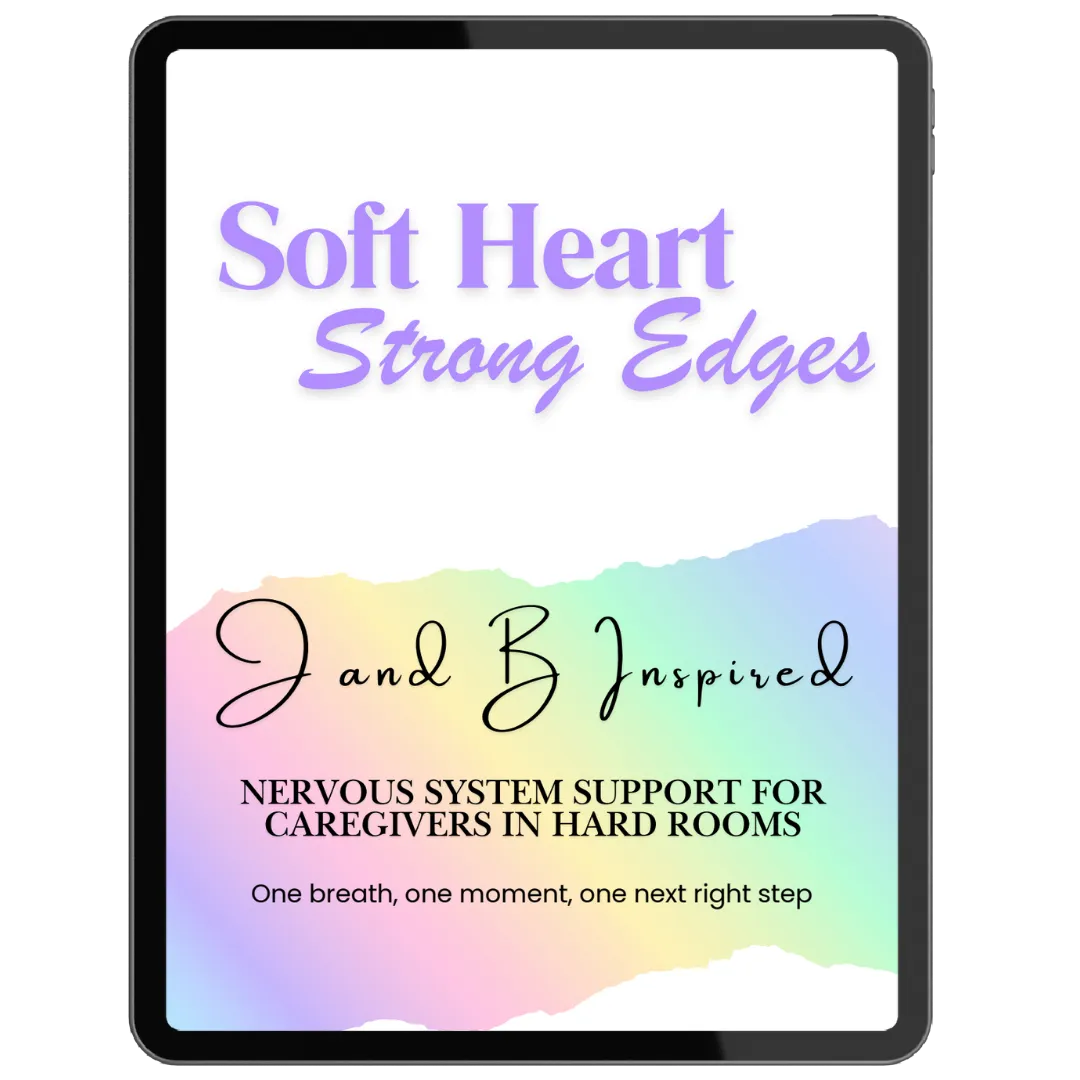
Protect What’s Left: Soft Heart, Strong Edges
When the pressure is high and the words disappear, this free guide gives you something solid to come back to. A simple framework and ready-to-use scripts help you advocate with confidence and keep your energy.
Radiant Moments
J and B Podcast Blog
Caregiver Burnout: Understanding Emotional Exhaustion and How to Recover
If you’ve been feeling tired in a way that sleep doesn’t fix, you’re not doing anything wrong. Many caregivers reach a point where the emotional weight of decision‑making, worry, and constant vigilance becomes heavier than their body can quietly carry.
This isn’t a personal failure — it’s a human response to a role that asks so much of your heart.
You’re not alone if you’ve been wondering why, you feel so drained, even on days when “nothing big” happened. Emotional exhaustion often shows up quietly, long before caregiver burnout becomes visible to others.
Take a breath. You’re allowed to name what’s hard.
Why Emotional Exhaustion Happens
1. You’re holding more than people can see
Caregiving isn’t just tasks. It’s invisible work: anticipating needs, monitoring symptoms, remembering appointments, navigating systems, and absorbing the emotional tone of the household. Even when you’re sitting still, your mind is working.
This constant internal alertness slowly wears down your emotional reserves.
2. You rarely get to “turn off”
Most caregivers don’t have long stretches of uninterrupted rest. Even when you’re technically off-duty, your brain stays half-alert — listening to a call, a sound, a shift in breathing, a change in mood. Over time, this creates a kind of background fatigue that feels like living with your shoulders slightly raised.
3. You care deeply — and that depth takes energy
Loving someone through illness, disability, ageing, or complexity is meaningful, but it’s also emotionally demanding. You’re navigating grief, hope, fear, and responsibility all at once. It makes sense that your emotional bandwidth feels stretched.
How Emotional Exhaustion Shows Up
1. You feel numb or disconnected
Not because you don’t care — but because your system is protecting you from overload.
2. Small decisions feel huge
Your brain is tired. Even simple choices can feel like too much.
3. You’re more sensitive than usual
Tears come quickly. Irritation comes quickly. Everything feels closer to the surface.
4. You feel guilty for needing rest
Caregivers often push through exhaustion because they believe they “should” be able to handle more. You don’t need to earn rest. You deserve it because you’re human.
Gentle Steps You Can Take
These steps are intentionally small. Choose only what feels doable today.
1. Name one feeling without judging it
Try: “I feel overwhelmed.” “I feel stretched thin.” “I feel tired in my bones.” Naming a feeling reduces its intensity and reminds your nervous system that you’re paying attention.
2. Give yourself a 90‑second reset
Set a timer. Slow your breathing. Relax your jaw. Let your shoulders drop. This tiny pause interrupts the cycle of emotional overload.
3. Put down one thing today
Not forever — just for now. A task, a worry, a conversation you don’t have the capacity for. Letting go of even one thing creates space.
4. Ask yourself: “What would make this 5% easier?”
Not perfect. Not fixed. Just 5% easier. A glass of water. A slower morning. A shorter to‑do list. A moment outside. Small shifts matter.
5. Let support be imperfect
If someone offers help, accept the version they can give — even if it’s not exactly how you’d do it. You don’t have to carry everything alone.
Invitation
If you’d like a gentle tool to help you reset hard days, you’re welcome to join the waitlist for the 90‑Second Reset — a calm, guided space designed to help caregivers pause and breathe again.
If weekly calm support would feel grounding, you’re invited to join the waitlist for the J & B Oasis Membership — a heart‑centered community offering monthly workshops, gentle growth tools, and emotional support for caregivers.
And if you’d like a simple way to reflect and find small moments of gratitude, you can also explore the Gratitude Journal — a gentle companion for quiet reflection and emotional grounding.

FREE DOWNLOAD
A free 10-minute guide with scripts to help caregivers hold boundaries in hard rooms, without burnout.
This free guide gives caregivers a simple 7-step framework and word-for-word scripts for medical appointments, school reviews and support conversations. Built from real caregiver life, it helps you walk into hard rooms ready, set boundaries with warmth, and keep showing up without running on empty.
Voices From Our Growing Carer Community
It was truly an honour to be invited into this calm, compassionate, safe space. Michelle is the kind of host who gets the best from her guests through thought-provoking, well-researched questions that speak to both her audience and her guests. It is relaxed but flows effortlessly, pausing for deeper thought when appropriate but always remaining on track. Clearly, an expert podcaster and most definitely has walked and walks, a journey that she shares with her listeners. Thank you, Michelle, for your compassion. It was truly an honour. With Gratitude and Compassion.

I loved being a guest on Michelle Anderson’s Radiant Moments Caregivers Oasis podcast. We had a really good conversation, and her questions made it easy to go deep. I truly recommend it. Thank you so much, Michelle, for creating such a warm and welcoming space and for inviting me to share my story and tools. I also loved how clear and organized everything was. I’d happily come back anytime. I hope this episode helps anyone who struggles with emotional or binge eating, or any habit they want to change, and shows them that things can get better… even if it doesn’t feel like it right now.

I really enjoyed being a guest on Radiant Moments. The conversation was incredibly fluid, thought-provoking, and filled with genuine energy. The host has a gift for asking the kind of deep, insightful questions that allow guests to share their best gems. It’s rare to find a platform that balances professional production with such a warm, welcoming atmosphere. If you’re a listener looking for inspiration or a fellow speaker looking for a high-quality show to visit, this is a must!

Michelle was an exceptional host—organized, thoughtful, and incredibly engaging. She asked such insightful questions and created a natural, meaningful flow throughout the entire interview. From the moment we matched, she was professional, prepared, and truly on top of every detail. It was an absolute honor to be interviewed by her. Happily do it again!

An absolutely wonderful conversation with an amazing host who was well-prepared, thoughtful and radiant!

Michelle is an incredible host! We had a wonderful conversation before, during, and after our interview. I highly recommend this show and host.

Very easy to talk to and enjoyed our time together.

Radiant Moments is talk that is straight from the heart. It is authentic, genuine, and heart-felt and there is a little something for everyone's healing. I couldn't recommend this thoughtful and sincere host more! Michelle is amazing.

If you're a caregiver running on empty and feeling guilty about it, Radiant Moments is the podcast you didn't know you needed—host Michelle creates a warm, judgment-free space that truly understands what caregiving demands from us daily, and what sets this podcast apart is her brilliant focus on doable strategies rather than unrealistic wellness advice. Her 90-second micro-meditation concept isn't just another buzzword; it's a realistic reset designed for people who don't have time for hour-long yoga sessions between medication schedules, emotional meltdowns, and doctor appointments. Michelle gives you permission to start small without guilt, then shows you exactly how to do it. With 50 episodes covering everything from sensory-friendly home environments to navigating medical appointments with confidence to meal prep that nourishes without overwhelming, she's built a comprehensive resource library that meets caregivers exactly where we are—exhausted, stretched thin, and desperately see

Michelle is a welcoming host and a pleasure to speak with. She had engaging questions that brought out the best of my work and experience for her listeners. She is very professional and sent me fantastic video clips and graphics for me to share on my platform.

Thank you for the wonderful conversation -- our mutual passion for providing older adults with solutions and support was exciting and I'm grateful to share this space with you!

We had an opportunity to share thoughts and perspectives. I learned. she asked some very good questions.

Amazing host and the conversation was very organic

It's been a great show to join. Fantastic preparation and wonderfully authentic! Thank you for this experience and the chance to contribute to reduce the struggles of people who feel they need to put themselves last to help others.

loved my conversation with Michelle. She was easy to talk to, and her empathy and genuine desire to help others truly resonated with me. I highly recommend her. Thank you Michelle for having me.

Michelle is beautiful and a wonderful host. She is insightful and thoughtful. Chatting with her is like chatting with an old friend. It was a joy to chat with her today.

Thanks for the great conversation!

FREE DOWNLOAD
A free 10-minute guide with scripts to help caregivers hold boundaries in hard rooms, without burnout.
This free guide gives caregivers a simple 7-step framework and word-for-word scripts for medical appointments, school reviews and support conversations. Built from real caregiver life, it helps you walk into hard rooms ready, set boundaries with warmth, and keep showing up without running on empty.
© Copyright 2024 J and B Inspired - Privacy Policy - Terms & Conditions